Sunday, February 24, 2013

Rend the curtain


Shane Koycsan’s  spoken voice poem called To This Day,  is a poignant description of the effects of bullying.  “Sticks and stones will break my bones but names will never hurt me” is a hollow phrase when it is remembered that the long-term effect of name-calling and other harassment is to create a divide, or draw a curtain between the one hearing and the one speaking. 
 
A bullied child is a lonely child.  He/she does not have permission to step into the inner circle.  This lack of acceptance creates a lack of relationship, which can have long-term effects because there is not a way for the child to learn what friendship means.  To learn what it means to love and be loved.

It is not the pain of the name; it is the pain of loneliness and rejection.

Names will hurt; they will hurt for a long, long time.

I frequently noted that the children most likely to bully were not mean or arrogant.  In my assessment, they were afraid.  Often, they were afraid of losing esteem from others or afraid of looking stupid.  More often than not, they were afraid of someone who was different – as if the difference of someone else reflected poorly on them.  If he doesn’t like the same football team, if she doesn’t dress the same way, if he isn’t interested in the same things, if she doesn’t know the rules about what is cool, then maybe what I am doing is wrong. 

The bullied child must be isolated so the insecurities of the bully can be appeased.  
 
Fear becomes contempt.  A curtain is drawn and a child is isolated from a relationship.

I find this to be equally true of adults.

I was thinking about the concept of fear becoming contempt when I was reading Numbers chapter 14.  Here the Children of Israel react in fear to what ten of the spies sent to the promise land have to report:

However, the people who dwell in the land are strong, and the cities are fortified and very large. . . Then the men who had gone up with him said, “We are not able to go up against the people, for they are stronger than we are.”  So they brought to the people of Israel a bad report of the land that they had spied out, saying, “The land, through which we have gone to spy it out, is a land that devours its inhabitants, and all the people that we saw in it are of great height.  Numbers 11: 31. . .32-33 (ESV)

Not even the words of Joshua and Caleb could ease the fear and prevent the Israelites from rebelling against God.  In chapter 14, verse 11, the LORD asks Moses:

“How long will this people despise me? Numbers 14: 11 (ESV)

Their fear turned to contempt.  They drew up a curtain and separated themselves from a relationship with God. 

It’s all about the relationship.  When there is a curtain, the relationship suffers.

I know in my heart I am not capable of saving myself.  This creates a fear that permeates my life, and breath, and soul.  One would think that this fear would turn me to God, yet I cling to the sin that I should trust only myself.  God has the strength I desire so my fear about my situation becomes contempt for God. 

My sin, my fear, my lack of trust, my pride all draw up a curtain between God and me. 

And Jesus cried out again with a loud voice and yielded up his spirit. And behold, the curtain of the temple was torn in two, from top to bottom. And the earth shook, and the rocks were split. Matthew 27:50-51

This is God’s response to my fear and my contempt.  Jesus gives His life and God’s love rips the curtain from top to bottom.
  
It’s all about the relationship.  In bullying and in faith; it’s about the relationship. And only God can mend that relationship.

Here are God’s words to those who are being bullied and to those of us who draw our own relationship curtains: TRUST

Be gracious to me, O God, for man tramples on me;
    all day long an attacker oppresses me;
 my enemies trample on me all day long,
    for many attack me proudly.
 When I am afraid,
    I put my trust in you.
 In God, whose word I praise,
    in God I trust; I shall not be afraid.
    What can flesh do to me?
 All day long they injure my cause;
    all their thoughts are against me for evil.
 They stir up strife, they lurk;
    they watch my steps,
    as they have waited for my life.
For their crime will they escape?
    In wrath cast down the peoples, O God!
You have kept count of my tossings;
    put my tears in your bottle.
    Are they not in your book?
 Then my enemies will turn back
    in the day when I call.
    This I know, thatGod is for me.
 In God, whose word I praise,

    in the Lord, whose word I praise,
 in God I trust; I shall not be afraid.
    What can man do to me? Psalm 56: 1-11

Thursday, February 14, 2013

The convenient forgetting of sin


My mother-in-law does not remember that she is a bit wobbly on her feet.  Each time she lists to the side she is amazed that she almost fell.  “Well, I’ve never done that before,” she usually asserts.  Because she doesn’t remember her wobbles, or her falls, she is reluctant to use the cane recommended by her doctor. 

I accidentally found a way to avoid an argument about the cane when I informed her that without it we could not get away with using the handicapped parking hanging tag.  She really enjoys prime parking and the idea that she is getting away with something.  The last time we got out of the car she asked me if I thought she should limp to really make it look good.

You go, Dorris.  Eighty years old, wobbly on your feet and on your memories, and still finding delight in sticking it to the man. 

Sometimes she looks at me and sighs in despair.  When I ask her what is wrong she tells me that I shouldn’t have the burden of caring for her.

This is one memory I wish I could preserve in her mind: Dorris, you are not a burden.  I love you.

I do admit it wears me out to take her some place as I must constantly think about the safest path to a chair, encourage her to take my arm and remind her to “use the cane instead of swinging it around.”  I find her a seat and go to take care of something, but must frequently turn my head to be sure she has not wandered off. It strains my brain to try to stay one step ahead of her.  Even with a fading memory I suspect she still tops me by several IQ points.   It wears me out to try to remember what she says and how she reacts so that Paul and I can make thoughtful decisions about the level of care she needs without prematurely taking away any freedoms she might have at the moment.

It wears me out, but it is a good tired; it is a privileged tired.

I thought about lost memories and burdens when I worshiped at the Ash Wednesday service.  We come to Christ burdened with our sin and that sin becomes His burden.  

But he was pierced for our transgressions;
    he was crushed for our iniquities;
upon him was the chastisement that brought us peace,
    and with his wounds we are healed.
Isaiah 53:5 (ESV)

It is a burden He took on willingly, lovingly and completely.  This truth is something we need to remember, yet, it is too easy to forget.

I know that for me, it is easy to forget my sin.  Once I do that, I lose sight of why I need my Savior.  This is a constant struggle of this life, but what amazes me, again and again, is how difficult it is for me to forget my neighbor’s sin.

Young children are convinced that everything they do is an “accident” while what their peers perpetrate against them was surely “on purpose.”  This comes from a lack of perspective taking; a skill young children are just beginning to learn.

As an adult, however, I have no such excuse.  If I can so easily forget my sin, I need to learn to forget the hurt someone else has caused me.  I think what often gets in the way of this forgiveness is the motive I assume the other person has for their behavior.  

She just wants to put me down so she can feel superior.

He just wants to keep me quiet.

She just wants to hurt me because she is angry.

He just wants to make himself look good.

Forgiving the sin would be easier if I could stop assuming I know the motive.  

But the Lord said to Samuel, “Do not look on his appearance or on the height of his stature, because I have rejected him. For the Lord sees not as man sees: man looks on the outward appearance, but the Lord looks on the heart.” I Samuel 16:7 (ESV)

God asks me to forgive the behavior (even as He forgives my sins) and to remind me that assigning motives is not my job any more than it is a skill I can accurately accomplish. This frees me from a significant burden.  It steers me back to my relationship with God and in this way strengthens my relationship with my fellow Christians. 

May this Lenten season reminds us of Christ’s complete love and sacrifice.  May it be a season that reminds us we do not carry the burden of our sin and we do not carry the burden of the sin of others.
Our burdens have been exchanged for love.

The next day he saw Jesus coming toward him, and said, “Behold, the Lamb of God, who takes away the sin of the world! John 1:29 (ESV)


Saturday, January 26, 2013

Learned Helplessness


I heard a wonderful speaker at Concordia University Nebraska.   Rev. James L. Brooks from Harmony Community Church in Chicago talked about the ministry opportunities and challenges in Lawndale, Illinois, home of Martin Luther King Jr. before he was killed.  In the process of his talk, he reminded us of a psychological discovery of Martin Seligman known as learned helplessness.
This discovery was found by accident when Dr. Seligman was studying depression.  Because he was a well-trained Behaviorist, he conducted experiments on animals in order to better understand humans.

Or so Behaviorists hoped.

In the experiments dogs were put in cages and subjected to mild electrical shocks.  The dogs given a means of stopping the shocks soon learned to do this.  

At this outcome, the Behaviorists nodded their heads in agreement.

But, the dogs that had no escape from the shocks, simply learned to sit down and suffer through it.
 
Here the Behaviorists raised their eyebrows in disbelief. 
 
This phenomenon was called learned helplessness because the dogs learned to perceived an absence of control.  Subsequent experiments with the helpless dogs showed that if they were moved to a cage that offered an option to stop the shocks, they would ignore that option and give in to learned helplessness.
 
At this point the Behaviorists are stunned and confused. 
 
Constuctivists: 1   Behaviorsits: 0

Learned helplessness is common in those who are depressed and people who are generally pessimistic about their abilities to control their situation are more prone to learned helplessness.  Just like it does not make sense that the dogs would neglect to try things that would improve their situation regarding electric shocks; it is confusing to us when we see people who do not do anything to improve their lives. 
 
Their situations have taught them, correctly or not, that they are helpless. Helpless to prevent the violence; helpless to achieve in school; helpless to survive into adulthood.

At this point, Rev, Brooks reminded us about the history of Lawndale.  He reminded us of how the area was redlined, how housing prices were artificially raised and financial credit was denied.  This situation, along with landlords happy to let their properties become slums as long as they were able to collect high rent from people denied financing to buy homes, created a situation that promoted learned helplessness.  This environment then deteriorated as the strength found in families was threatened.  The decline of family has left the area crime-ridden and the people without hope.

In case we think that red-lining was an evil of the past, we should be reminded that in the last sub-prime loan crisis it has been found that banks purposely pushed minorities into sub-prime loans even when they qualified for prime loans.  Whenever evil finds a way to profit; it thrives.
 
Learned helplessness is the state we are in when it comes to our sin and salvation.  We cannot get out from under the burden of our sin and the pain it causes us.  We may try to fight our sin.  We may try to deny it. We may even give in to our sin, thinking if we cannot stop it, we might as well enjoy it. 

For your arrows have sunk into me,
    and your hand has come down on me.
There is no soundness in my flesh
    because of your indignation;
there is no health in my bones
    because of my sin.
For my iniquities have gone over my head;
    like a heavy burden, they are too heavy for me. Psalm 38: 2-4(ESV)

However, the only real response is to relinquish any control we may think we have. 
For I am ready to fall,
    and my pain is ever before me.
 I confess my iniquity;
    I am sorry for my sin. Psalm 38: 17-18 (ESV)

When it comes to sin, learned helplessness is our best option.  We must confess that we have no control over our sin or the pain it causes us.  We must fall into the arms of Salvation.

Do not forsake me, O Lord!
    O my God, be not far from me!
 Make haste to help me,
    O Lord, my salvation! Psalm 38: 21-22 (ESV)

Just imagine what the Behaviorists would say to that?  They would surely shake their head and turn and walk away.  There is no good scientific theory to explain this reaction. 

As we learn about fellow brothers and sisters who live a life of pain and challenge, we need to remember about learned helplessness.  We need to better understand why people who live in grief may not pull themselves up by their bootstraps.  We need to remember that we have grown up in a world where we have frequently had help, good models, family support.  We have rarely been redlined into a world of anything but our own sin. 

Just as it makes little sense to the world that we Christians would relinquish control of our sin and pain to take the hand of the One who offers Grace and Salvation. We need to stop expecting people who live in constant struggle to do what we expect.  Instead, we should go to them, sit down with them, and offer the hand of grace and mercy even as it has been offered to us.

When he saw the crowds, he had compassion for them, because they were harassed and helpless, like sheep without a shepherd. Matthew 9:36 (ESV)

Blessed is the one whose transgression is forgiven,
    whose sin is covered. Psalm 32:1 (ESV)

Sunday, December 16, 2012

Grieving over the loss of children


What do we do when the lives of 20 children are tragically taken from this world in one cruel, twisted action?  How do we answer this question:

Why did it happen?

It certainly didn’t happen because God doesn’t care about children.

He will tend his flock like a shepherd;
    he will gather the lambs in his arms;
he will carry them in his bosom,
    and gently lead those that are with young. Isaiah 40:11

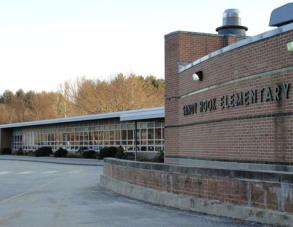
No, God loves all of His children; He knows each of us and watches over us with care.  He is a Father who watches our every move and knows the count of the hairs on our head.  He cared no less than that, for the children of Sandy Hook School.  He cares for the children who lost their lives; He cares for the children who witnessed the shootings and struggle with those memories; He cares for the parents who grieve.

It certainly didn’t happen, as some have said, because we have taken Christian teaching out of the schools. The idea that God would punish these children because the government of their parents prohibits faith from being taught in their school is not only a horrible thought, but a wrong one.   In 2006 a man entered an Amish school, a school where the Christian faith was taught, and killed five young students.  Even in the town where our Savior was born, innocent babies were killed upon the orders of a wicked king. 

Therefore, since we have been justified by faith, we have peace with God through our Lord Jesus Christ. Through him we have also obtained access by faith into this grace in which we stand, and we rejoice in hope of the glory of God.  Not only that, but we rejoice in our sufferings, knowing that suffering produces endurance,  and endurance produces character, and character produces hope, and hope does not put us to shame, because God's love has been poured into our hearts through the Holy Spirit who has been given to us. Romans 5: 1-5

The teaching of the Christian faith can be prohibited in our schools, but faith was not gone from Sandy Hook on that day.  Many of the children in that school had faith poured into their hearts through the Holy Spirit.  No man, no law, can take away that faith. 

It certainly didn’t happen because there are too many guns in our world or not enough guns at the school, or because we do not care for our mentally ill.  And it certainly didn’t happen because of the way the media treats these horrible events, or the way we seem to lust after every bit of information as if that means we are grieving with those who have suffered the loss.

No, it happened, plain and simple, because we are sinners living in a sinful world.

Therefore, just as sin came into the world through one man, and death through sin, and so death spread to all men because all sinned— Romans 5:12

Many more than 20 children die, in our world, every day.  They die of heart defects, from accidents, from gunshots in drive-by shootings.  They die from malaria, malnutrition, and cancer.  In every case, their deaths are senseless and painful to those who love them and miss them.  We see the pain this time, because we see ourselves in the faces of the parents.  We feel the terror because the news of these violent deaths repeatedly assaults us from the television, newspaper, and live feed on our mobile data devices.  We are touched and saddened by these deaths and that grief is real.

 Yet, children die every day because of our sin and because of the sinful, dirty, evil world in which we live; because of the sin we cling to; the sin that motivates our every thought and action.   

And God loves us anyway, perfectly, completely, and mercifully, even as He grieves over us and the children lost to death.

But the free gift is not like the trespass. For if many died through one man's trespass, much more have the grace of God and the free gift by the grace of that one man Jesus Christ abounded for many. And the free gift is not like the result of that one man's sin. For the judgment following one trespass brought condemnation, but the free gift following many trespasses brought justification. For if, because of one man's trespass, death reigned through that one man, much more will those who receive the abundance of grace and the free gift of righteousness reign in life through the one man Jesus Christ.
Therefore, as one trespass led to condemnation for all men, so one act of righteousness leads to justification and life for all men. For as by the one man's disobedience the many were made sinners, so by the one man's obedience the many will be made righteous.  Now the law came in to increase the trespass, but where sin increased, grace abounded all the more, so that, as sin reigned in death, grace also might reign through righteousness leading to eternal life through Jesus Christ our Lord. Romans 5: 15-21

God’s love knows the grief of the violent death of a child.  He knows what we felt when we heard of the death of these children.  He knows about the grief of the family members, teachers and classmates who mourn the loss of loved ones. 

God gathers them in His arms and carries them close to His heart. 

It falls on us to mourn with these parents, and with any parent suffering the loss of a child.  We mourn with them, pray for them, and offer them the comfort of God’s love in our words and actions.

Blessed be the God and Father of our Lord Jesus Christ, the Father of mercies and God of all comfort, who comforts us in all our affliction, so that we may be able to comfort those who are in any affliction, with the comfort with which we ourselves are comforted by God. For as we share abundantly in Christ's sufferings, so through Christ we share abundantly in comfort too. II Corinthians 1: 3-5

What about our own children?  How do we answer their questions, especially when those questions are so similar to the ones we lift up to our Heavenly Father?

When we have unanswerable questions we turn to the truth we know.  We turn to our Bibles and read and remember the faith put into our hearts at our Baptism.

God loves the children who were killed, and He loves us. 

God loves us, no matter what. 

There is nothing we can do, there is nothing that evil can do, that can separate us from that love.

No, in all these things we are more than conquerors through him who loved us. For I am sure that neither death nor life, nor angels nor rulers, nor things present nor things to come, nor powers, nor height nor depth, nor anything else in all creation, will be able to separate us from the love of God in Christ Jesus our Lord. Romans 8: 37-38